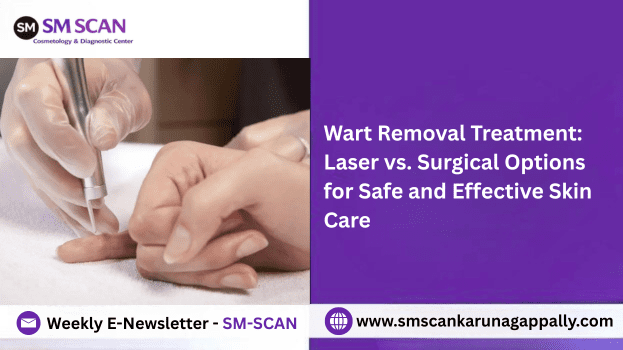
Wart Removal Treatment: Laser vs. Surgical Options for Safe and Effective Skin Care
Introduction to Wart Removal Treatment
Warts are one of the most common skin concerns affecting people of all ages. These small, rough skin growths are caused by the human papillomavirus (HPV), which enters the skin through tiny cuts or damaged areas. Although warts are generally harmless, they can become painful, irritating, and cosmetically uncomfortable depending on their location. Many people search for the best wart removal treatment when over-the-counter remedies fail or when warts begin spreading.
At SM SCAN—Cosmetology & Diagnostic Center, patients from Kasaragod, Karunagappalli, Puthiyakavu, Kulasekharapuram, and Kerala receive advanced dermatology solutions for effective wart removal. Modern dermatology now offers highly successful methods, including laser treatment and minor surgical procedures, that help remove stubborn warts with minimal downtime.
Understanding the differences between these treatment options is essential before choosing the right procedure for your skin condition.
What Are Warts and Why Do They Appear?
Warts are skin growths caused by viral infection from HPV. The virus stimulates rapid skin cell growth, creating a raised, rough-textured bump. Warts can appear on hands, feet, faces, necks, fingers, genital areas, and even under nails.
They spread through skin-to-skin contact, contaminated surfaces, shared personal items, or self-contact when scratching infected skin. People with weak immunity, children, gym users, and swimmers are generally more prone to developing warts.
Some warts disappear naturally after months or years, but many remain persistent and may spread to nearby skin. This is when professional wart removal treatment becomes necessary.
Common Types of Warts Treated by Dermatologists
1. Common Warts
Common warts usually appear on fingers, hands, and around nails. They have a rough surface and are slightly raised. These are among the most frequently treated skin conditions in dermatology clinics.
2. Plantar Warts
Plantar warts develop on the soles of feet. Because body weight pushes them inward, they can become painful while walking. These often require professional removal, as home remedies are less effective.
3. Flat Warts
Flat warts are smaller, smoother, and often appear in clusters on the face, forehead, neck, and hands. They spread quickly and are common in children and teenagers.
4. Filiform Warts
These are long, thread-like warts commonly found near eyelids, lips, or nose. Since they occur on delicate skin, expert dermatological care is important.
5. Genital Warts
These require specialized medical attention due to their infectious nature and sensitive location.
Why Home Remedies Often Fail
Many individuals initially try home treatments such as salicylic acid, duct tape, garlic paste, or freezing kits. While these methods may work for very small or fresh warts, stubborn or deep-rooted warts often resist treatment.
Improper removal attempts can cause skin damage, scarring, infection, or wart spreading. This is why dermatologists recommend professional wart removal treatment for safe and complete removal.
At SM SCAN, doctors first evaluate the wart type, size, depth, and skin condition before recommending the ideal solution.
Laser Wart Removal Treatment
1. What Is Laser Wart Removal?
Laser wart removal uses focused laser energy to target wart tissue and destroy blood vessels feeding the wart. Once blood supply is cut off, the wart tissue gradually dries and falls away.
This treatment is highly effective for resistant, multiple, or cosmetically sensitive warts.
2. How Laser Treatment Works
During the procedure, the dermatologist cleans the treatment area and may apply local anesthesia if needed. The laser precisely targets wart tissue without significantly affecting surrounding skin.
The procedure usually takes 15–30 minutes depending on the number and size of warts.
3. Benefits of Laser Wart Removal
Laser treatment is popular because it offers precision, minimal bleeding, and reduced recurrence rates. Patients with facial warts, neck warts, and multiple stubborn lesions often prefer laser therapy.
Another major benefit is faster healing compared to aggressive surgical methods. Laser treatment is especially suitable for areas where cosmetic appearance matters.
4. Recovery After Laser Treatment
After laser wart removal, mild redness, swelling, or scabbing may occur for a few days. Patients are advised to keep the area dry, avoid scratching, and follow dermatologist instructions.
Healing generally occurs within one to two weeks.
Surgical Wart Removal Treatment
1. What Is Surgical Wart Removal?
Surgical wart removal involves physically cutting or scraping away the wart under local anesthesia. Dermatologists may use techniques such as excision, curettage, or electrocautery.
This is commonly recommended for large, deep, painful, or highly resistant warts.
2. Surgical Procedure Explained
The dermatologist numbs the treatment area and removes the wart using sterile instruments. In some cases, heat or cautery is used to seal blood vessels and reduce bleeding.
The removed tissue may sometimes be sent for testing if the diagnosis is uncertain.
3. Benefits of Surgical Removal
Surgery offers immediate wart removal in a single session, which is beneficial for very large or stubborn lesions.
Patients who want instant removal often choose surgery over multiple treatment sessions.
4. Recovery After Surgery
Surgical removal may involve a slightly longer healing time compared to laser treatment. Minor soreness, wound care, and dressing changes may be required.
Healing can take one to three weeks depending on wart size and location.
Laser vs. Surgical Wart Removal: Which Is Better?
Choosing between laser and surgery depends on wart characteristics, location, recurrence history, and patient preference.
Laser treatment is generally ideal for smaller, cosmetic, facial, or multiple warts. It offers minimal bleeding, precision, and faster healing.
Surgical removal is better suited for larger, deeper, painful, or resistant warts requiring complete physical removal.
At SM SCAN—Cosmetology & Diagnostic Center, dermatologists recommend personalized wart removal treatment after examining skin type and wart severity.
Patients from Kasaragod, Karunagappalli, Puthiyakavu, Kulasekharapuram, and Kerala can access advanced dermatology procedures under expert supervision.
Who Should Consider Professional Wart Removal?
Individuals should consult a dermatologist if warts are painful, increasing in size, multiplying, bleeding, itching excessively, or affecting confidence.
Professional treatment is strongly advised for facial warts, genital warts, diabetic patients, immunocompromised individuals, and recurring warts.
Ignoring persistent warts may lead to spreading or discomfort over time.
Why Choose SM SCAN for Wart Removal Treatment?
SM SCAN—Cosmetology & Diagnostic Center provides modern dermatology solutions with advanced equipment and expert skin specialists.
Patients receive accurate skin evaluation, customized treatment plans, sterile procedures, and proper aftercare guidance.
The clinic serves patients across Kasaragod, Karunagappalli, Puthiyakavu, Kulasekharapuram, and Kerala for safe and reliable skin treatments.
Whether you need laser therapy or surgical wart removal, the center ensures professional care focused on both medical effectiveness and cosmetic results.
Post-Treatment Care for Better Results
After wart removal, following aftercare instructions is essential for smooth healing.
Patients should avoid picking scabs, touching treated skin unnecessarily, sharing towels, or exposing healing skin to excessive moisture.
Using prescribed creams and attending follow-up visits helps reduce recurrence.
Maintaining hygiene and immunity also lowers chances of future wart development.
Conclusion
Warts may seem minor initially, but they can become persistent, painful, and cosmetically distressing over time. Choosing the right wart removal treatment is important for complete removal and healthy skin restoration.
Laser treatment offers precision, faster healing, and minimal scarring, while surgical removal provides immediate results for larger or stubborn warts.
At SM SCAN—Cosmetology & Diagnostic Center, patients receive advanced dermatological care for safe and effective wart removal solutions tailored to their skin condition.
If you are dealing with stubborn or spreading warts, consulting a dermatologist early can help prevent complications and improve skin confidence.
FAQs
1. Is laser wart removal painful?
Laser wart removal usually causes minimal discomfort. Local anesthesia may be used depending on wart size and location.
2. How many sessions are needed for laser wart removal?
Small warts may need one session, while stubborn or multiple warts may require additional sessions.
3. Does wart removal leave scars?
Laser treatment usually causes minimal scarring. Surgical removal may leave a small scar depending on wound healing.
4. Can warts come back after removal?
Recurrence is possible because HPV can remain in surrounding skin, but professional treatment reduces recurrence risk.
4. Which is better: laser or surgery for wart removal?
Laser is better for cosmetic and smaller warts, while surgery is often recommended for larger or deeper warts.
5. How much does wart removal treatment cost in Kerala?
Cost depends on wart size, number, treatment type, and dermatologist consultation.
I’m truly grateful for my healing journey. After struggling with herpes for a long time, I can confidently say I’ve experienced a major turnaround in my health by. Dr Ahonsie The symptoms that once caused me discomfort and worry are now gone, and I feel stronger and healthier than ever. This experience has restored my hope and given me a new sense of peace by. Dr Ahonsie I’m thankful for the support, care, and steps I took that led me to this point. Healing is possible, and I’m living proof of that. Doctor’s contact: .Email: drahonsie00@gmail.com or whatsapp +2348039482367