
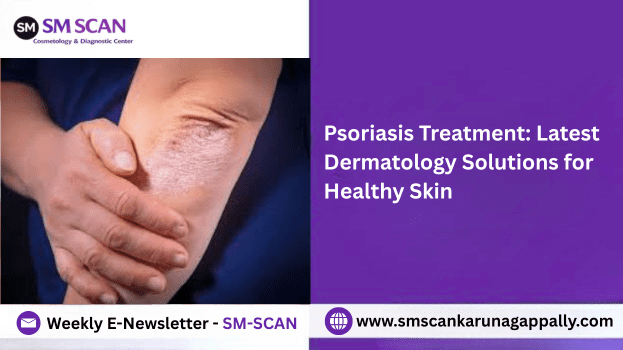
Psoriasis Treatment: Latest Dermatology Solutions for Healthy Skin
Psoriasis is a chronic skin condition that affects millions of people worldwide and can significantly impact daily life. This skin disorder is not just about dry patches or redness; it is an autoimmune condition where skin cells multiply much faster than normal, leading to thick, scaly, and inflamed patches on the skin. People dealing with psoriasis often experience itching, discomfort, skin irritation, and emotional stress due to visible symptoms. The demand for advanced psoriasis treatment in Kerala has increased because more patients now seek modern dermatology solutions that provide long-term relief and better skin health.
At SM SCAN—Cosmetology & Diagnostic Center, patients from Taliparamba, Karunagappalli, Puthiyakavu, Kulasekharapuram, and nearby areas in Kerala can access professional dermatology care designed to manage psoriasis effectively. With the latest treatment technologies, dermatologists now offer personalized solutions that target the root cause of psoriasis instead of simply reducing visible symptoms.
What is psoriasis?
Psoriasis is a stubborn autoimmune problem that makes your skin cells grow way too fast. Usually, skin takes weeks to renew itself, but if you have psoriasis, this process speeds up so much that new cells pile up within just days. That’s how you end up with those thick, scaly patches.
You’ll often see these patches on elbows, knees, scalps, backs, faces, hands, and feet—but honestly, they can show up anywhere. Sometimes they even affect your nails or the joints. In places like Taliparamba, folks with psoriasis are always on the lookout for the best skin specialist because the symptoms can really get out of hand without proper care.
It’s important to know that psoriasis isn’t contagious. You won’t catch it from someone or pass it along just by touching. Still, a lot of people feel awkward or shy because their skin looks different, and that can take an emotional toll.
Common Symptoms of Psoriasis
Psoriasis doesn’t show up the same way for everyone. Some just get a bit of dryness and flaking. Others deal with inflammation, painful cracks, and skin that really makes life harder.
Usually, you’ll notice red, raised patches on your skin covered with white or silvery scales. These spots can itch a lot—and if you scratch them, they might start to bleed. Your skin might feel super tight and dry too, which sometimes leads to painful splits.
The scalp is a common target. Scalp psoriasis often looks like a really bad case of dandruff, brings a lot of itching and scaling, and, honestly, can make people feel pretty self-conscious. Nails aren’t safe either—nail psoriasis can thicken them, change their color, cause little pits in the surface, or even make your nails pull away from the nail bed.
It’s not just about skin and nails. Sometimes, people with psoriasis get joint pain, swelling, and stiffness. That signals possible psoriatic arthritis—a condition that really needs a doctor to step in right away.
If you keep seeing red, scaly, itchy patches or dry skin that just won’t clear up, make an appointment with a dermatologist in Taliparamba. Getting it checked is the best way forward.
Causes of Psoriasis
Psoriasis happens when the immune system goes a little haywire and starts attacking healthy skin cells. This kicks off quick skin cell growth and inflammation.
Genetics matters—a lot. If someone in your family has psoriasis, your risk jumps. But honestly, it’s not just about your DNA. You need other factors to actually set things off.
Life throws plenty of triggers your way. Stress tops the list. When you’re under emotional strain, inflammation ramps up and your immune system gets shaky.
Small skin injuries—like cuts, burns, bug bites, or infections—can spark psoriasis lesions. Doctors call this the Koebner phenomenon.
Winter can be tough. Cold, dry air sucks all the moisture out of your skin, making symptoms worse. And if you smoke or drink heavily, psoriasis usually gets more severe.
Some medications, like lithium, beta-blockers, or antimalarial drugs, are known to trigger flare-ups, too.
Figuring out what sets off your symptoms makes a huge difference in managing and treating psoriasis.
Different Types of Psoriasis
Psoriasis isn’t the same for everyone. Dermatologists break it down into different types based on how it looks and the symptoms you’re dealing with.
1. Plaque Psoriasis
Plaque psoriasis is the one most people know. Those thick, red patches covered in silvery scales usually show up on your elbows, knees, scalp, or lower back.
2. Scalp Psoriasis
If your scalp’s involved, you get flaky scales, itching, and redness. Sometimes, those plaques spread to your forehead, neck, or behind your ears—especially if they’re severe.
3. Guttate Psoriasis
Guttate psoriasis looks different. It’s these small red spots that often show up in kids or young adults after a bacterial infection, like strep throat.
4. Inverse Psoriasis
Inverse psoriasis pops up in the skin folds—under your arms, around your groin, under your breasts, or on your buttocks. Instead of thick scales, it creates smooth, red patches.
5. Pustular Psoriasis
There’s a rare kind where you see pus-filled blisters surrounded by inflamed skin. That’s serious and needs medical attention fast.
6. Psoriatic Arthritis
Psoriasis can mess with your joints, too. You might notice swelling, stiffness, or pain—and if you don’t treat it, you could end up with lasting joint damage.
At SM SCAN, a dermatologist can figure out which type you have and help you start advanced psoriasis treatment in Taliparamba.
Latest Dermatology Solutions for Psoriasis Treatment
Modern dermatology has really changed the way we handle psoriasis. Doctors now tailor treatment plans to fit how severe the symptoms are and what works best for a person’s everyday life.
1. Topical Treatments
If you’ve got mild to moderate psoriasis, doctors usually start with topical medications—things like prescription creams, ointments, lotions, or medicated shampoos.
Corticosteroid creams are popular because they cut down redness, swelling, and itching pretty quickly. Vitamin D treatments—those analogs you might see—help put the brakes on skin cells growing too fast. Moisturizers matter, too, because without them, your skin dries out and cracks.
For scalp psoriasis, you’ll hear a lot about coal tar and salicylic acid. They’re pretty effective at reducing that annoying scaling.
Honestly, people looking for the best psoriasis creams in Taliparamba get more out of seeing a dermatologist than trying random products on their own. A doctor can match you with a prescription that actually works for your skin.
2. Phototherapy
Phototherapy works really well for treating psoriasis. Basically, your skin gets exposed to carefully controlled ultraviolet light while a doctor keeps a close eye on things.
UVB therapy helps by slowing down those overactive skin cells and easing inflammation. If someone has moderate or severe psoriasis, they usually go with narrowband UVB.
There’s also excimer laser therapy, which focuses directly on the problem spots and leaves the healthy skin alone.
As long as a skilled dermatologist handles it, phototherapy is safe.
3. Oral Medications
For moderate to severe psoriasis, dermatologists may prescribe oral medications that control immune activity.
Methotrexate is commonly used to slow cell growth and reduce inflammation. Cyclosporine suppresses immune overactivity. Retinoids may also help regulate skin turnover.
These medications require monitoring because long-term use can cause side effects.
4. Biologic Therapy
Biologics are among the latest breakthroughs in psoriasis treatment. These injectable medications target specific immune pathways responsible for psoriasis.
Biologics provide excellent results for severe psoriasis and psoriatic arthritis. They can significantly reduce symptoms and improve quality of life.
Many patients searching for the latest psoriasis treatment in Taliparamba are interested in biologic therapies for long-term relief.
5. Lifestyle-Based Dermatology Management
Treatment is not limited to medications. Lifestyle improvements help reduce flare-ups and improve skin healing.
A healthy anti-inflammatory diet supports skin health. Hydration is essential for maintaining skin moisture.
Stress management techniques like yoga, meditation, and exercise may reduce flare frequency.
Avoiding harsh soaps, hot water, smoking, and alcohol also helps control symptoms.
Why Choose SM SCAN—Cosmetology & Diagnostic Center?
Kerala has become a trusted destination for dermatology care because of advanced clinics, experienced doctors, and accessible treatment options.
At SM SCAN—Cosmetology & Diagnostic Center, patients receive customized psoriasis treatment plans tailored to symptom severity, skin type, and medical history.
Patients from Taliparamba, Karunagappalli, Puthiyakavu, Kulasekharapuram, and nearby Kerala locations benefit from expert diagnosis, modern treatment options, and compassionate care.
How to Prevent Psoriasis Flare-Ups
Although psoriasis cannot be permanently cured, flare-ups can be minimized through consistent skin care and trigger management.
Keeping skin moisturized is one of the most effective prevention methods. Dry skin worsens scaling and itching.
Using fragrance-free skincare products reduces irritation. Avoid scratching plaques, as this can worsen lesions.
Managing stress is important because anxiety and emotional stress are common flare triggers.
Sun exposure in moderation may help, but excessive sunburn can worsen symptoms.
Regular dermatologist follow-ups ensure treatment effectiveness and allow for medication adjustments.
Patients who follow a proper treatment routine often experience long periods of remission.
Psoriasis Treatment at SM SCAN—Cosmetology & Diagnostic Center
SM SCAN offers advanced psoriasis care with evidence-based dermatology treatments.
Services include skin evaluation, scalp psoriasis treatment, nail psoriasis management, phototherapy, prescription medications, and long-term skin care planning.
The clinic focuses on safe, effective, and personalized treatment solutions for patients across Kerala.
When Should You Visit a Dermatologist?
Many people ignore psoriasis symptoms until the condition worsens. Early treatment prevents complications and improves outcomes.
You should consult a dermatologist if skin patches persist for weeks, itching becomes severe, or lesions spread rapidly.
If psoriasis interferes with sleep, work, confidence, or daily activities, medical intervention is recommended.
Joint pain associated with psoriasis should never be ignored, as early psoriatic arthritis treatment prevents long-term damage.
Searching for expert psoriasis treatment near Taliparamba can help you access timely care and symptom control.
Conclusion
Psoriasis is a lifelong skin condition, but with the right dermatology care, it can be effectively managed. Modern psoriasis treatment now goes beyond temporary symptom relief by addressing inflammation, immune dysfunction, and trigger management. From topical creams and phototherapy to oral medicines and biologics, patients have access to advanced solutions that improve quality of life.
If you are searching for reliable psoriasis treatment in Kerala, SM SCAN—Cosmetology & Diagnostic Center provides expert dermatology services for patients in Taliparamba, Karunagappally, Puthiyakavu, Kulasekharapuram, and surrounding areas.
Healthy skin starts with the right diagnosis and personalized treatment plan.
FAQs
1. What is the best treatment for psoriasis?
The best psoriasis treatment depends on severity. Mild cases are managed with creams, while severe psoriasis may require phototherapy, oral medications, or biologics.
2. Is psoriasis permanently curable?
Psoriasis currently has no permanent cure, but treatments can effectively control symptoms and reduce flare-ups.
3. Which doctor treats psoriasis?
A dermatologist specializes in psoriasis diagnosis and treatment.
4. Can stress trigger psoriasis?
Yes, stress is one of the most common psoriasis triggers and can worsen symptoms significantly.
5. Is psoriasis contagious?
No, psoriasis is not contagious and does not spread through skin contact.
6. Where can I get psoriasis treatment in Taliparamba?
You can consult SM SCAN—Cosmetology & Diagnostic Center for expert psoriasis treatment and advanced dermatology care in Taliparamba.
7. Which is the best psoriasis treatment in Kerala?
The best treatment depends on psoriasis severity, symptoms, and patient health condition. Dermatologist consultation is essential.